


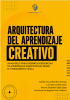
Hace falta preguntarse, antes de abrir cualquier libro sobre educación, si el mundo necesita otro más. Los estantes ya están llenos de promesas de transformación, la mayoría escritas desde la teoría pura o desde la anécdota de un aula que funcionó una vez. Este no pretende sumarse a esa fila. Nace de una tensión concreta, sostenida durante años en cuatro campos que rara vez se sientan a la misma mesa: el Diseño y la Educación Artística, el diseño gráfico y el marketing digital, los sistemas de información, la innovación y los negocios digitales. Carola Silva, Luis Raúl Jiménez Tello, Viviana Elizabeth Cajas y Paulina Ponce llegamos, cada uno por su propio camino profesional, a la misma sospecha incómoda, la de que buena parte de lo que llamamos enseñar sigue operando con la lógica de una fábrica que ya no existe.
La educación en Diseño, Arquitectura y Artes suele presumir de estar a salvo de ese diagnóstico. Usa talleres, produce objetos que existen fuera del cuaderno de un estudiante, mide procesos de trabajo tanto como resultados finales, y arrastra, desde hace más de un siglo de tradición pedagógica propia, la convicción de que enseñar a hacer es distinto a enseñar a repetir. No exámenes. Y sin embargo, cualquiera que haya corregido una crítica de estudio sabe que el formato del taller, por sí solo, no garantiza nada. Puede convertirse, con la misma facilidad que una clase expositiva, en un espacio donde el criterio del docente es la única respuesta válida y donde una rúbrica genérica reemplaza el pensamiento que debería estar evaluando.
Ese es el punto exacto donde este libro decide intervenir. No con una receta nueva, ninguna de las siete ideas que lo componen es original por separado. Grant Wiggins llevaba años señalando un problema concreto en la evaluación educativa. Una rúbrica genérica, la misma para cualquier tarea, puede ser rápida de aplicar, pero rara vez le dice al estudiante qué hizo bien y qué debería repetir, porque mide en abstracto lo que solo tiene sentido medido en concreto (Wiggins, 1998). Esa exigencia de especificidad, llevada al extremo, es el mismo principio que sostiene el componente de evaluación auténtica de este modelo. Y no es el único préstamo con nombre propio. El propósito como brief viene del diseño inverso, la activación de esquemas previos de la psicología cognitiva, la experiencia significativa y la reflexión de la tradición experiencial, la construcción social del conocimiento del socio-constructivismo. Lo que aporta este volumen es la arquitectura que las integra, y la honestidad de mostrar exactamente dónde termina lo que la evidencia respalda y dónde empieza lo que todavía es hipótesis por probar.
Quien busque una fórmula mágica se va a decepcionar, y con razón. El modelo completo, los siete componentes actuando juntos, todavía no cuenta con el tipo de validación experimental que un lector riguroso exigiría antes de llamarlo consenso científico. Este libro lo dice sin rodeos, en más de un lugar, porque callarlo hubiera sido más cómodo y menos honesto. Lo que sí ofrece, con solidez, es una síntesis de práctica informada por décadas de investigación dispersa, sometida a la crítica más seria disponible de cada una de sus fuentes, y puesta a prueba en trece disciplinas que van de la Educación Inicial al Emprendimiento digital, pasando por la Ingeniería y las Artes.
Vive un momento particular la publicación de este trabajo. Desde que Anthropic lanzó Claude 3.5 Sonnet en junio de 2024, y OpenAI su propio GPT-4o apenas un mes antes, la inteligencia artificial generativa produce, en segundos, borradores, esquemas y primeras versiones que antes tomaban horas. Algunos verán en eso el fin de cualquier discusión sobre metodología docente, total, para qué diseñar una experiencia si una máquina puede generar el contenido. Este libro sostiene lo contrario, con evidencia reciente que lo respalda. Cuanto más automatizable se vuelve la producción de un resultado, más urgente se vuelve la pregunta que ninguna herramienta responde por sí sola, qué problema merece resolverse y para quién. Esa pregunta la conoce cualquier diseñador antes de abrir un programa. También debería conocerla cualquier docente antes de abrir una clase, no como metáfora inspiradora sino como el primer paso de un método que puede aprenderse, practicarse y equivocarse, igual que se aprende, se practica y se falla en cualquier oficio de diseño.
No hace falta compartir la formación de ninguno de los cuatro autores para encontrar algo útil en las páginas que siguen. Hace falta, eso sí, estar dispuesto a leer un libro que no promete certezas donde no las hay, que cita la crítica más dura contra sus propias fuentes antes de defenderlas, y que prefiere una pregunta bien planteada a una respuesta fácil. La pregunta, en todo caso, no es si el lector está dispuesto a hacer ese ejercicio, sino si el sistema educativo que lo formó está preparado para escuchar la respuesta.
Alfieri, L., Nokes-Malach, T. J., & Schunn, C. D. (2013). Learning through case comparisons: A meta-analytic review. Educational Psychologist, 48(2), 87–113.
Anastasiou, D., Wirngo, C. N., & Bagos, P. (2024). The effectiveness of concept maps on students’ achievement in science: A meta-analysis. Educational Psychology Review, 36(2), 39.
Anderson, L. W., & Krathwohl, D. R. (Eds.). (2001). A taxonomy for learning, teaching, and assessing: A revision of Bloom’s taxonomy of educational objectives. Longman.
Arntz, M., Gregory, T., & Zierahn, U. (2016). The risk of automation for jobs in OECD countries: A comparative analysis (OECD Social, Employment and Migration Working Papers, No. 189). OECD Publishing.
Ausubel, D. P. (1968). Educational psychology: A cognitive view. Holt, Rinehart and Winston.
Ausubel, D. P., Novak, J. D., & Hanesian, H. (1978). Educational psychology: A cognitive view (2.ª ed.). Holt, Rinehart and Winston.
Banco Mundial, UNESCO, UNICEF, FCDO, USAID, & Fundación Bill y Melinda Gates. (2022). The state of global learning poverty: 2022 update. Banco Mundial.
Bastani, H., Bastani, O., Sungu, A., Ge, H., Kabakcı, Ö., & Mariman, R. (2025). Generative AI without guardrails can harm learning: Evidence from high school mathematics. Proceedings of the National Academy of Sciences, 122(30), e2422633122.
Bennett, R. E. (2011). Formative assessment: A critical review. Assessment in Education: Principles, Policy & Practice, 18(1), 5–25.
Blanton, M. L., & Kaput, J. J. (2011). Functional thinking as a route into algebra in the elementary grades. En J. Cai & E. Knuth (Eds.), Early algebraization: Advances in mathematics education. Springer. https://doi.org/10.1007/978-3-642-17735-4_2
Brown, T. (2008). Design thinking. Harvard Business Review, 86(6), 84–92.
Brown, T. L. (2018). A critical assessment of the place of post-occupancy evaluation in the critique and creation of socially responsible architecture. Intelligent Buildings International, 10(3), 143–152.
Bruer, J. T. (1997). Education and the brain: A bridge too far. Educational Researcher, 26(8), 4–16.
CAST. (2018). Universal design for learning guidelines (versión 2.2). Author.
Cerqueira, A. R., Alves, A. S., Monteiro-Soares, M., Hailey, D., Loureiro, D., & Baptista, S. (2023). Visual Thinking Strategies in medical education: A systematic review. BMC Medical Education, 23, 536.
Chen, C.-H., & Yang, Y.-C. (2019). Revisiting the effects of project-based learning on students’ academic achievement: A meta-analysis investigating moderators. Educational Research Review, 26, 71–81.
Chernikova, O., Heitzmann, N., Stadler, M., Holzberger, D., Seidel, T., & Fischer, F. (2020). Simulation-based learning in higher education: A meta-analysis. Review of Educational Research, 90(4), 499–541.
Cho, J., & Trent, A. (2005). “Backward” curriculum design and assessment: What goes around comes around, or haven’t we seen this before? Taboo: The Journal of Culture and Education, 9(2), 105–122.
Clements, D. H., & Sarama, J. (2008). Experimental evaluation of the effects of a research-based preschool mathematics curriculum. American Educational Research Journal, 45, 443–494.
Contu, A., & Willmott, H. (2003). Re-embedding situatedness: The importance of power relations in learning theory. Organization Science, 14(3), 283–296.
Cranz, G., Lindsay, G., Morhayim, L., & Sagan, H. (2021). Post occupancy evaluation in architectural education and practice. Technology | Architecture + Design, 5(1), 25–30.
de Jong, T. (2010). Cognitive load theory, educational research, and instructional design: Some food for thought. Instructional Science, 38(2), 105–134.
Design Council. (2005). The Double Diamond: A universally accepted depiction of the design process. Design Council.
Detterman, D. K., & Sternberg, R. J. (Eds.). (1993). Transfer on trial: Intelligence, cognition, and instruction. Ablex Publishing.
Double, K. S., McGrane, J. A., & Hopfenbeck, T. N. (2020). The impact of peer assessment on academic performance: A meta-analysis of control group studies. Educational Psychology Review, 32(2), 481–509.
Driessen, E., van Tartwijk, J., van der Vleuten, C., & Wass, V. (2007). Portfolios in medical education: Why do they meet with mixed success? A systematic review. Medical Education, 41(12), 1224–1233.
Elaldı, Ş., & Çifçi, T. (2021). The effectiveness of using infographics on academic achievement: A meta-analysis and a meta-thematic analysis. Journal of Pedagogical Research, 5(4), 92–118.
Freeman, S., Eddy, S. L., McDonough, M., Smith, M. K., Okoroafor, N., Jordt, H., & Wenderoth, M. P. (2014). Active learning increases student performance in science, engineering, and mathematics. Proceedings of the National Academy of Sciences, 111(23), 8410–8415.
Frey, C. B., & Osborne, M. A. (2017). The future of employment: How susceptible are jobs to computerisation? Technological Forecasting and Social Change, 114, 254–280.
Gagné, R. (1985). The conditions of learning (4.ª ed.). Holt, Rinehart & Winston.
Gallup. (2016). Student enthusiasm falls as high school graduation nears [2016 Gallup Student Poll Snapshot Report]. Gallup News. https://news.gallup.com/opinion/gallup/211631/student-enthusiasm-falls-high-school-graduation-nears.aspx
Gardner, H. (2011). Frames of mind: The theory of multiple intelligences. Basic Books.
Gerlich, M. (2025a). AI tools in society: Impacts on cognitive offloading and the future of critical thinking. Societies, 15(1), 6.
Gerlich, M. (2025b). Correction: Gerlich, M. AI tools in society: Impacts on cognitive offloading and the future of critical thinking. Societies 2025, 15, 6. Societies, 15(9), 252.
Graham, S., McKeown, D., Kiuhara, S., & Harris, K. R. (2012). A meta-analysis of writing instruction for students in the elementary grades. Journal of Educational Psychology, 104(4), 879–896.
Greenwood, J. (1993). Reflective practice: A critique of the work of Argyris and Schön. Journal of Advanced Nursing, 18(8), 1183–1187.
Hattie, J. (2009). Visible learning: A synthesis of over 800 meta-analyses relating to achievement. Routledge.
Horn, R. E. (1998). Visual language: Global communication for the 21st century. MacroVU, Inc.
Jeffries, K. K. (2015). A CAT with caveats: Is the Consensual Assessment Technique a reliable measure of graphic design creativity? International Journal of Design Creativity and Innovation, 5(1–2), 16–28.
Kayes, D. C. (2002). Experiential learning and its critics: Preserving the role of experience in management learning and education. Academy of Management Learning & Education, 1(2), 137–149.
Knowles, M. S., Holton, E. F., III, Robinson, P. A., & Swanson, R. A. (2020). The adult learner: The definitive classic in adult education and human resource development (9.ª ed.). Routledge. https://doi.org/10.4324/9780429299612
Kolb, D. A. (1984). Experiential learning: Experience as the source of learning and development. Prentice-Hall.
Kosmyna, N., Hauptmann, E., Yuan, Y. T., Situ, J., Liao, X. H., Beresnitzky, A. V., Braunstein, I., & Maes, P. (2025). Your brain on ChatGPT: Accumulation of cognitive debt when using an AI assistant for essay writing task (arXiv:2506.08872) [Preprint].
Larsen, T. M., Endo, B. H., Yee, A. T., Do, T., & Lo, S. M. (2022). Probing internal assumptions of the revised Bloom’s taxonomy. CBE—Life Sciences Education, 21(4), ar66.
Levy, A. R., & Moore Mensah, F. (2021). Learning through the experience of water in elementary school science. Water, 13(1), 43.
Martella, A. M., Martella, R. C., Yatcilla, J. K., Newson, A., Shannon, E. N., & Voorhis, C. (2023). How rigorous is active learning research in STEM education? An examination of key internal validity controls in intervention studies. Educational Psychology Review, 35(4), Article 107.
Marton, F. (2015). Necessary conditions of learning. Routledge.
Martínez-Gregorio, S., Badenes-Ribera, L., & Oliver, A. (2021). Effect of entrepreneurship education on entrepreneurship intention and related outcomes in educational contexts: A meta-analysis. The International Journal of Management Education, 19(3), 100545.
Marzano, R. J., & Pickering, D. J. (1997). Dimensions of learning: Teacher’s manual (2.ª ed.). Association for Supervision and Curriculum Development (ASCD).
Mayer, R. E. (2009). Multimedia learning (2.ª ed.). Cambridge University Press.
Miao, F., & Holmes, W. (2023). Guidance for generative AI in education and research. UNESCO.
Nicolescu, B. (2002). Manifesto of transdisciplinarity (K.-C. Voss, Trans.). State University of New York Press. (Obra original publicada en 1996)
Novak, J. D., & Musonda, D. (1991). A twelve-year longitudinal study of science concept learning. American Educational Research Journal, 28(1), 117–153.
OCDE y Comisión Europea. (2026b). Empowering learners for the age of AI: An AI literacy framework for primary and secondary education. OECD Publishing. https://doi.org/10.1787/65cd27d4-en
OCDE. (2023). PISA 2022 results (Volume II): Learning during – and from – disruption. OECD Publishing. https://doi.org/10.1787/a97db61c-en
OCDE. (2026a). OECD digital education outlook 2026: Exploring effective uses of generative AI in education. OECD Publishing. https://doi.org/10.1787/062a7394-en
Panadero, E., Jönsson, A., Pinedo, L., & Fernández-Castilla, B. (2023). Effects of rubrics on academic performance, self-regulated learning, and self-efficacy: A meta-analytic review. Educational Psychology Review, 35(4), Article 113.
Perkins, D. N. (2014). Future wise: Educating our children for a changing world. Jossey-Bass.
Perkins, D. N., & Salomon, G. (1992). Transfer of learning. En T. Husén & T. N. Postlethwaite (Eds.), The international encyclopedia of education (2.ª ed., pp. 425–441). Pergamon Press.
Pope, D. S., Rounds, C. M., & Clarke-Midura, J. (2017). Testing the effectiveness of two natural selection simulations in the context of a large-enrollment undergraduate laboratory class. Evolution: Education and Outreach, 10, 3.
Rachal, J. R. (2002). Andragogy’s detectives: A critique of the present and a proposal for the future. Adult Education Quarterly, 52(3), 210–227.
Robinson, K., & Aronica, L. (2015). Creative schools: The grassroots revolution that’s transforming education. Viking.
Ropovik, I., Adamkovic, M., & Greger, D. (2021). Neglect of publication bias compromises meta-analyses of educational research. PLoS ONE, 16(6), e0252415.
Rosson, M. B., Carroll, J. M., & Rodi, C. M. (2004). Case studies for teaching usability engineering. En Proceedings of the 35th SIGCSE Technical Symposium on Computer Science Education (pp. 36–40). ACM.
Schleicher, A. (2025, 13 de febrero). Why schools need to reengage with bored learners. OECD Education and Skills Today.
Schroeder, N. L., Nesbit, J. C., Anguiano, C. J., & Adesope, O. O. (2018). Studying and constructing concept maps: A meta-analysis. Educational Psychology Review, 30(2), 431–455.
Schön, D. A. (1983). The reflective practitioner: How professionals think in action. Basic Books.
Silverman, A. M., Gwinn, J. D., & Van Boven, L. (2015). Stumbling in their shoes: Disability simulations reduce judged capabilities of disabled people. Social Psychological and Personality Science, 6(4), 464–471.
Simpson, A. (2017). The misdirection of public policy: Comparing and combining standardised effect sizes. Journal of Education Policy, 32(4), 450–466.
Sinha, T., & Kapur, M. (2021). When problem solving followed by instruction works: Evidence for productive failure. Review of Educational Research, 91(5), 761–798.
Sokhanvar, Z., Salehi, K., & Sokhanvar, F. (2021). Advantages of authentic assessment for improving the learning experience and employability skills of higher education students: A systematic literature review. Studies in Educational Evaluation, 70, 101030.
Staw, B. M. (1976). Knee-deep in the big muddy: A study of escalating commitment to a chosen course of action. Organizational Behavior and Human Performance, 16(1), 27–44.
Sánchez, P., Jácome, L., Sancho, C., & Sánchez, R. (2022). Interactive software for the learning of mathematics in elementary school students in the province of Tungurahua. En Sustainability, Energy and City (Lecture Notes in Networks and Systems, Vol. 379, pp. 156–170). Springer.
Terwilliger, J. S. (1997). Semantics, psychometrics, and assessment reform: A close look at “authentic” assessments. Educational Researcher, 26(8), 24–27.
Tokuhama-Espinosa, T. (2019). Five pillars of the mind: Redesigning education to suit the brain. W. W. Norton & Company.
van de Pol, J., Volman, M., & Beishuizen, J. (2010). Scaffolding in teacher-student interaction: A decade of research. Educational Psychology Review, 22(3), 271–296.
Vescio, V., Ross, D., & Adams, A. (2008). A review of research on the impact of professional learning communities on teaching practice and student learning. Teaching and Teacher Education, 24(1), 80–91.
Vlachopoulos, D., & Makri, A. (2024). A systematic literature review on authentic assessment in higher education: Best practices for the development of 21st century skills, and policy considerations. Studies in Educational Evaluation, 83, 101425.
Vygotsky, L. S. (1978). Mind in society: The development of higher psychological processes. Harvard University Press.
Waterhouse, L. (2006). Multiple intelligences, the Mozart effect, and emotional intelligence: A critical review. Educational Psychologist, 41(4), 207–225.
Watters, A. (2015, 25 de abril). The invented history of “the factory model of education”. Hack Education.
Wenger, E. (1998). Communities of practice: Learning, meaning, and identity. Cambridge University Press. https://doi.org/10.1017/CBO9780511803932
Wiggins, G. (1998). Educative assessment: Designing assessments to inform and improve student performance. Jossey-Bass.
Wiggins, G., & McTighe, J. (2005). Understanding by design (2.ª ed.). ASCD.
Wiliam, D. (2011). Embedded formative assessment. Solution Tree Press.
Zhang, L., Carter, R. A., Jr., Greene, J. A., & Bernacki, M. L. (2024). Unraveling challenges with the implementation of Universal Design for Learning: A systematic literature review. Educational Psychology Review, 36(35), 1–30.
Zhang, S. K., & Scribner, L. L. (2024). Would you rather… a simulation or a client-based project? A case study of experiential learning methods in digital marketing analytics courses. Journal of Marketing Education. Publicación anticipada en línea.
Özyurt, M., Kan, H., & Kıyıkcı, A. (2021). The effectiveness of Understanding by Design model in science teaching: A quasi-experimental study. Eurasian Journal of Educational Research, 94, 1–24.

This work is licensed under a Creative Commons Attribution-NonCommercial-NoDerivatives 4.0 International License.