




Emprender es, en esencia, tomar decisiones bajo incertidumbre por lo que quien abre un negocio debe estimar cuántos clientes llegarán, cuánto estarán dispuestos a pagar, cuánto costará operar y cuánto tiempo podrá sostenerse antes de alcanzar el equilibrio. Durante generaciones, esas estimaciones se hicieron con intuición, experiencia y unos pocos datos al alcance de la mano. En el Ecuador y en buena parte de América Latina, donde emprender es para muchas familias la principal fuente de ingresos, el resultado es conocido: abundan las iniciativas, pero solo una parte logra consolidarse y crecer. Mejorar la calidad de esas decisiones es, por tanto, una tarea que interesa tanto a quienes emprenden como a la economía y a la sociedad en su conjunto.
Este libro aparece en un momento en que esa tarea se ha vuelto, por primera vez, alcanzable a gran escala, hoy en día la inteligencia artificial ha reducido de manera notable el costo de predecir y herramientas que hace pocos años estaban reservadas a las grandes corporaciones y el pronóstico de la demanda, la segmentación de clientes, la evaluación del riesgo financiero o la simulación de escenarios se encuentran al alcance de los pequeños negocios. Sin embargo, la obra no cae en el entusiasmo fácil más bien advierte que un modelo puede acertar con los datos del pasado y equivocarse con los casos nuevos, que una recomendación que nadie sabe explicar difícilmente merece confianza y que, si las herramientas quedan en manos de unos pocos, la brecha entre los emprendimientos que sobreviven y los que cierran puede ampliarse en lugar de reducirse.
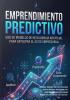
El mérito principal del texto consiste en ofrecer una visión integral del emprendimiento predictivo, que va desde sus fundamentos económicos hasta su aplicación práctica. A lo largo de sus capítulos se recorren los modelos econométricos clásicos y los algoritmos de aprendizaje automático, la inteligencia artificial explicable, el análisis de mercados y consumidores, las finanzas predictivas, los gemelos digitales y la simulación del riesgo, para culminar en la propuesta de un modelo integral con su propio sistema de puntuación, sus mecanismos de gobernanza y su estrategia de validación. Todo ello se presenta con un lenguaje accesible, sin renunciar al rigor, y con una atención constante a la realidad ecuatoriana: la informalidad, el emprendimiento por necesidad, la escasez de datos sistemáticos y los estudios que ya se han realizado en el país sobre la supervivencia de las empresas.
Por su amplitud, la obra está llamada a ser útil para lectores diversos y las personas emprendedoras encontrarán en ella orientaciones concretas para anticipar sus ventas, conocer mejor a sus clientes y detectar a tiempo las señales de riesgo financiero; las entidades financieras, incubadoras y aceleradoras, criterios para evaluar con mayor precisión y equidad a los nuevos negocios; docentes y estudiantes, un material que integra la economía, la administración y la ciencia de datos; y quienes diseñan políticas públicas, elementos para construir programas de fomento sustentados en evidencia.
Recomiendo esta obra como una contribución valiosa al estudio y a la práctica del emprendimiento en la región ya que su enseñanza más importante quizá sea que la inteligencia artificial no sustituye a quien emprende, sino que amplía su capacidad de ver hacia adelante. El emprendimiento del futuro no será el que delegue sus decisiones en un algoritmo, sino el que sepa combinar la anticipación que ofrecen los datos con el juicio, la creatividad y la responsabilidad que siempre han definido a la actividad emprendedora.
Agrawal, A., Gans, J., y Goldfarb, A. (2022). Power and prediction: The disruptive economics of artificial intelligence. Harvard Business Review Press.
Asamblea Nacional del Ecuador. (2020, 28 de febrero). Ley Orgánica de Emprendimiento e Innovación. Registro Oficial, Suplemento n.º 151.
Asamblea Nacional del Ecuador. (2021, 26 de mayo). Ley Orgánica de Protección de Datos Personales. Registro Oficial, Quinto Suplemento n.º 459.
Asamblea Nacional del Ecuador. (2023, 7 de febrero). Ley Orgánica de Transparencia y Acceso a la Información Pública. Registro Oficial, Segundo Suplemento n.º 245.
Banco Mundial. (2021). Informe sobre el desarrollo mundial 2021: Datos para una vida mejor. Banco Mundial. https://wdr2021.worldbank.org/the-report
Bantis, E., Clements, M. P., y Urquhart, A. (2023). Forecasting GDP growth rates in the United States and Brazil using Google Trends. International Journal of Forecasting, 39(4), 1909–1924. https://doi.org/10.1016/j.ijforecast.2022.10.003
Bidgoli, M. R., Vanani, I. R., y Goodarzi, M. (2024). Predicting the success of startups using a machine learning approach. Journal of Innovation and Entrepreneurship, 13(1), 1–27. https://doi.org/10.1186/s13731-024-00436-x
Breque, M., De Nul, L., y Petridis, A. (2021). Industry 5.0: Towards a sustainable, human-centric and resilient European industry. Comisión Europea, Dirección General de Investigación e Innovación. https://research-and-innovation.ec.europa.eu/knowledge-publications-tools-and-data/publications/all-publications/industry-50_en
Bussmann, N., Giudici, P., Marinelli, D., y Papenbrock, J. (2021). Explainable machine learning in credit risk management. Computational Economics, 57(1), 203–216. https://doi.org/10.1007/s10614-020-10042-0
Carayannis, E. G., y Morawska-Jancelewicz, J. (2022). The futures of Europe: Society 5.0 and Industry 5.0 as driving forces of future universities. Journal of the Knowledge Economy, 13(4), 3445–3471. https://doi.org/10.1007/s13132-021-00854-2
Centro Común de Investigación [JRC]. (s. f.). 10-step guide: Composite indicators & scoreboards. Comisión Europea, Knowledge for Policy. https://knowledge-for-policy.ec.europa.eu/composite-indicators/toolkit_en/navigation-page/10-step-guide_en
Chalmers, D., MacKenzie, N. G., y Carter, S. (2021). Artificial intelligence and entrepreneurship: Implications for venture creation in the fourth industrial revolution. Entrepreneurship Theory and Practice, 45(5), 1028–1053. https://doi.org/10.1177/1042258720934581
Chicco, D., y Jurman, G. (2023). The Matthews correlation coefficient (MCC) should replace the ROC AUC as the standard metric for assessing binary classification. BioData Mining, 16. https://doi.org/10.1186/s13040-023-00322-4
Chico, J. R., y Altamirano, D. J. (2023). Factores de riesgo en la mortalidad de las empresas productivas del cantón Ambato. Journal of Science and Research, 8(3), 122–141. https://revistas.utb.edu.ec/index.php/sr/article/view/2919
Cueva, A. A., Feijoo, I. M., Sarmiento, B. C., y Mite, M. T. (2025). Uso de la regresión logística para predecir el éxito de modelos de negocio en microempresas. Revista Universidad de Guayaquil, 139(1), 1–9. https://doi.org/10.53591/rug.v139i1.1296
del Olmo-García, F., Crecente-Romero, F. J., del Val-Núñez, M. T., y Sarabia-Alegría, M. (2023). Entrepreneurial activity in an environment of digital transformation: An analysis of relevant factors in the euro area. Humanities and Social Sciences Communications, 10, Artículo 755. https://doi.org/10.1057/s41599-023-02270-0
Dwivedi, R., Dave, D., Naik, H., Singhal, S., Rana, O., Patel, P., Qian, B., Wen, Z., Shah, T., Morgan, G., y Ranjan, R. (2023). Explainable AI (XAI): Core ideas, techniques, and solutions. ACM Computing Surveys, 55(9). https://doi.org/10.1145/3561048
Erwin, K., y Engelbrecht, A. (2023). Meta-heuristics for portfolio optimization. Soft Computing, 27(24), 19045–19073. https://doi.org/10.1007/s00500-023-08177-x
Fabianová, J., Janeková, J., Fedorko, G., y Molnár, V. (2023). A comprehensive methodology for investment project assessment based on Monte Carlo simulation. Applied Sciences, 13(10), Artículo 6103. https://doi.org/10.3390/app13106103
Firmansyah, E. B., Machado, M. R., y Moreira, J. L. R. (2024). How can artificial intelligence (AI) be used to manage customer lifetime value (CLV)? A systematic literature review. International Journal of Information Management Data Insights, 4(2), Artículo 100279.
Fornari, F., Compagnucci, I., Callisto De Donato, M., Bertrand, Y., Beyel, H. H., Carrión, E., Franceschetti, M., Groher, W., Grüger, J., Kilic, E., Koschmider, A., Leotta, F., Li, C.-Y., Lugaresi, G., Malburg, L., Mangler, J., Mecella, M., Pastor, O., Riss, U., … Valderas, P. (2024). Digital twins of business processes: A research manifesto. Internet of Things, Artículo 101477. https://doi.org/10.1016/j.iot.2024.101477
Giuggioli, G., y Pellegrini, M. M. (2023). Artificial intelligence as an enabler for entrepreneurs: A systematic literature review and an agenda for future research. International Journal of Entrepreneurial Behavior & Research, 29(4), 816–837. https://doi.org/10.1108/IJEBR-05-2021-0426
Global Entrepreneurship Monitor [GEM]. (2025). Global Entrepreneurship Monitor 2024/2025 global report: Entrepreneurship reality check. GEM. https://gemconsortium.org/report/51621
Global Entrepreneurship Monitor [GEM]. (2026). Global Entrepreneurship Monitor 2025/2026 global report: From uncertainty to opportunity. GEM. https://www.gemconsortium.org/reports/latest-global-report
González Cedeño, G. (2026). Modelo de riesgos proporcionales de Cox aplicado a empresas de Manabí – Ecuador. Revista Científica y Arbitrada de la Facultad de Ciencias Sociales, Derecho y Bienestar “Eloy Alfaro de Economía y Gestión”, 83–102. https://revistas.uleam.edu.ec/index.php/economiaygestion/article/download/973/1226/4896
Goodell, J. W., Kumar, S., Lim, W. M., y Pattnaik, D. (2021). Artificial intelligence and machine learning in finance: Identifying foundations, themes, and research clusters from bibliometric analysis. Journal of Behavioral and Experimental Finance, 32, Artículo 100577. https://doi.org/10.1016/j.jbef.2021.100577
Grinsztajn, L., Oyallon, E., y Varoquaux, G. (2022). Why do tree-based models still outperform deep learning on typical tabular data? En Advances in Neural Information Processing Systems 35 (NeurIPS 2022). https://arxiv.org/abs/2207.08815
Gupta, S., Modgil, S., Bhattacharyya, S., y Bose, I. (2022). Artificial intelligence for decision support systems in the field of operations research: Review and future scope of research. Annals of Operations Research, 308(1), 215–274. https://doi.org/10.1007/s10479-020-03856-6
Hambly, B., Xu, R., y Yang, H. (2023). Recent advances in reinforcement learning in finance. Mathematical Finance, 33(3), 437–503. https://doi.org/10.1111/mafi.12382
Hartmann, J., Heitmann, M., Siebert, C., y Schamp, C. (2023). More than a feeling: Accuracy and application of sentiment analysis. International Journal of Research in Marketing, 40(1), 75–87. https://doi.org/10.1016/j.ijresmar.2022.05.005
Hidalgo-Díaz, R., Alaminos, D., y Delgado-Gómez, J. (2025). New early warning tools for insolvency prevention in the European context. Tourism & Management Studies, 21(3), 53–70. https://doi.org/10.18089/tms.20250304
Houle, S., y Macdonald, R. (2023). Identifying nascent high-growth firms using machine learning (Staff Working Paper 2023-53). Bank of Canada. https://doi.org/10.34989/swp-2023-53
Hyndman, R. J., y Athanasopoulos, G. (2021). Forecasting: Principles and practice (3.ª ed.). OTexts. https://otexts.com/fpp3/
Instituto Nacional de Estadística y Censos [INEC]. (2024). Registro Estadístico de Empresas 2023 (definitivo). INEC. https://www.ecuadorencifras.gob.ec/registro-estadistico-de-empresas-2023-definitivo/
James, G., Witten, D., Hastie, T., y Tibshirani, R. (2021). An introduction to statistical learning: With applications in R (2.ª ed.). Springer. https://doi.org/10.1007/978-1-0716-1418-1
Lasio, V., Amaya, A., Espinosa, M. P., Mahauad, M. D., y Sarango, P. (2024). Global Entrepreneurship Monitor Ecuador 2023/2024. ESPAE-ESPOL y UTPL. https://edes.utpl.edu.ec/wp-content/uploads/2024/07/Informe-GEM-Ecuador-2023.pdf
Makridakis, S., Spiliotis, E., y Assimakopoulos, V. (2022). M5 accuracy competition: Results, findings, and conclusions. International Journal of Forecasting, 38(4), 1346–1364. https://doi.org/10.1016/j.ijforecast.2021.11.013
Mehrabi, N., Morstatter, F., Saxena, N., Lerman, K., y Galstyan, A. (2021). A survey on bias and fairness in machine learning. ACM Computing Surveys, 54(6), Artículo 115. https://doi.org/10.1145/3457607
Moesmann, M., y Pedersen, T. B. (2024). Data-driven prescriptive analytics applications: A comprehensive survey (arXiv:2412.00034). arXiv. https://arxiv.org/abs/2412.00034
Molnar, C. (2022). Interpretable machine learning: A guide for making black box models explainable (2.ª ed.). https://christophm.github.io/interpretable-ml-book/
National Institute of Standards and Technology [NIST]. (2023). Artificial intelligence risk management framework (AI RMF 1.0) (NIST AI 100-1). Departamento de Comercio de los Estados Unidos. https://doi.org/10.6028/NIST.AI.100-1
Organización de las Naciones Unidas para la Educación, la Ciencia y la Cultura [UNESCO]. (2021). Recomendación sobre la ética de la inteligencia artificial. Adoptada por la Conferencia General en su 41.ª reunión, 23 de noviembre de 2021.
Organización para la Cooperación y el Desarrollo Económicos [OCDE]. (2025). AI adoption by small and medium-sized enterprises (OECD discussion paper for the G7). OECD Publishing.
Park, J., Choi, S., y Feng, Y. (2024). Predicting startup success using two bias-free machine learning: Resolving data imbalance using generative adversarial networks. Journal of Big Data, 11, Artículo 122. https://doi.org/10.1186/s40537-024-00993-8
Parlamento Europeo y Consejo de la Unión Europea. (2024). Reglamento (UE) 2024/1689 por el que se establecen normas armonizadas en materia de inteligencia artificial (Reglamento de Inteligencia Artificial). Diario Oficial de la Unión Europea.
Pekin, S., y Şengül, A. (2024). The good, the better and the challenging: Insights into predicting high-growth firms using machine learning. Borsa Istanbul Review, 24, 47–60. https://doi.org/10.1016/j.bir.2024.12.001
Raisch, S., y Krakowski, S. (2021). Artificial intelligence and management: The automation–augmentation paradox. Academy of Management Review, 46(1), 192–210. https://doi.org/10.5465/amr.2018.0072
Roy, D., y Dutta, M. (2022). A systematic review and research perspective on recommender systems. Journal of Big Data, 9(1), 1–36. https://doi.org/10.1186/s40537-022-00592-5
Saad, M. H., Hagelaar, G., van der Velde, G., y Omta, S. W. F. (2021). Conceptualization of SMEs’ business resilience: A systematic literature review. Cogent Business & Management, 8(1), Artículo 1938347. https://doi.org/10.1080/23311975.2021.1938347
Salminen, J., Mustak, M., Sufyan, M., y Jansen, B. J. (2023). How can algorithms help in segmenting users and customers? A systematic review and research agenda for algorithmic customer segmentation. Journal of Marketing Analytics, 11(4), 677–692. https://doi.org/10.1057/s41270-023-00235-5
Shepherd, D. A., Souitaris, V., y Gruber, M. (2021). Creating new ventures: A review and research agenda. Journal of Management, 47(1), 11–42. https://doi.org/10.1177/0149206319900537
Shepherd, D. A., y Gruber, M. (2021). The lean startup framework: Closing the academic–practitioner divide. Entrepreneurship Theory and Practice, 45(5), 967–998. https://doi.org/10.1177/1042258719899415
Shwartz-Ziv, R., y Armon, A. (2022). Tabular data: Deep learning is not all you need. Information Fusion, 81, 84–90. https://doi.org/10.1016/j.inffus.2021.11.011
Spada, I., Barandoni, S., Giordano, V., Chiarello, F., Fantoni, G., y Martini, A. (2023). What users want: A natural language processing approach to discover users’ needs from online reviews. En Proceedings of the International Conference on Engineering Design (ICED23) (pp. 3879–3888). https://doi.org/10.1017/pds.2023.389
Stam, E., y van de Ven, A. (2021). Entrepreneurial ecosystem elements. Small Business Economics, 56(2), 809–832. https://doi.org/10.1007/s11187-019-00270-6
Superintendencia de Protección de Datos Personales [SPDP]. (2026, 10 de marzo). Resolución n.º SPDP-SPD-2026-0009-R: Norma general para la garantía del derecho de protección de datos personales en el uso de sistemas de inteligencia artificial. Registro Oficial n.º 240.
Veldkamp, L., y Chung, C. (2024). Data and the aggregate economy. Journal of Economic Literature, 62(2), 458–484. https://doi.org/10.1257/jel.20221580
Wang, L., Ma, C., Feng, X., Zhang, Z., Yang, H., Zhang, J., Chen, Z., Tang, J., Chen, X., Lin, Y., Zhao, W. X., Wei, Z., y Wen, J.-R. (2024). A survey on large language model based autonomous agents. Frontiers of Computer Science, 18(6), Artículo 186345. https://doi.org/10.1007/s11704-024-40231-1
Wankhade, M., Rao, A. C. S., y Kulkarni, C. (2022). A survey on sentiment analysis methods, applications, and challenges. Artificial Intelligence Review, 55(7), 5731–5780. https://doi.org/10.1007/s10462-022-10144-1
Wurm, B., Becker, M., Pentland, B. T., Lyytinen, K., Weber, B., Grisold, T., Mendling, J., y Kremser, W. (2023). Digital twins of organizations: A socio-technical view on challenges and opportunities for future research. Communications of the Association for Information Systems, 52, 552–565. https://doi.org/10.17705/1CAIS.05223
Wurth, B., Stam, E., y Spigel, B. (2022). Toward an entrepreneurial ecosystem research program. Entrepreneurship Theory and Practice, 46(3), 729–778. https://doi.org/10.1177/1042258721998948
Zambrano, F. J., Sánchez, M. E., y Valls Martínez, M. del C. (2021). Factores explicativos de la supervivencia empresarial de la mipyme en Ecuador. Estudios de Economía Aplicada, 39(8). https://doi.org/10.25115/eea.v39i8.4061
Żbikowski, K., y Antosiuk, P. (2021). A machine learning, bias-free approach for predicting business success using Crunchbase data. Information Processing & Management, 58(4), Artículo 102555. https://doi.org/10.1016/j.ipm.2021.102555
Zhao, Q., Li, Y., y Dai, Z. (2023). Machine-learning-enabled intelligence computing for crisis management in small and medium-sized enterprises (SMEs). Technological Forecasting and Social Change, 191, Artículo 122492. https://doi.org/10.1016/j.techfore.2023.122492
Zizi, Y., Jamali-Alaoui, A., El Goumi, B., Oudgou, M., y El Moudden, A. (2021). An optimal model of financial distress prediction: A comparative study between neural networks and logistic regression. Risks, 9(11), Artículo 200. https://doi.org/10.3390/risks9110200

This work is licensed under a Creative Commons Attribution-NonCommercial-NoDerivatives 4.0 International License.